TechSim
Numerical Simulation
Modelling
Optimisation
Modelling Reality.
Optimising the Future.
TechSim develops and applies models, methods and tools for numerical simulation and optimisation, bridging empirical science, industrial process design and AI. Our work spans a broad range of domains, from fluid dynamics and structural mechanics to environmental science and computational medicine. We combine mathematical rigour with practical relevance, delivering solutions that perform in research as well as in industrial application.
Featured Simulation
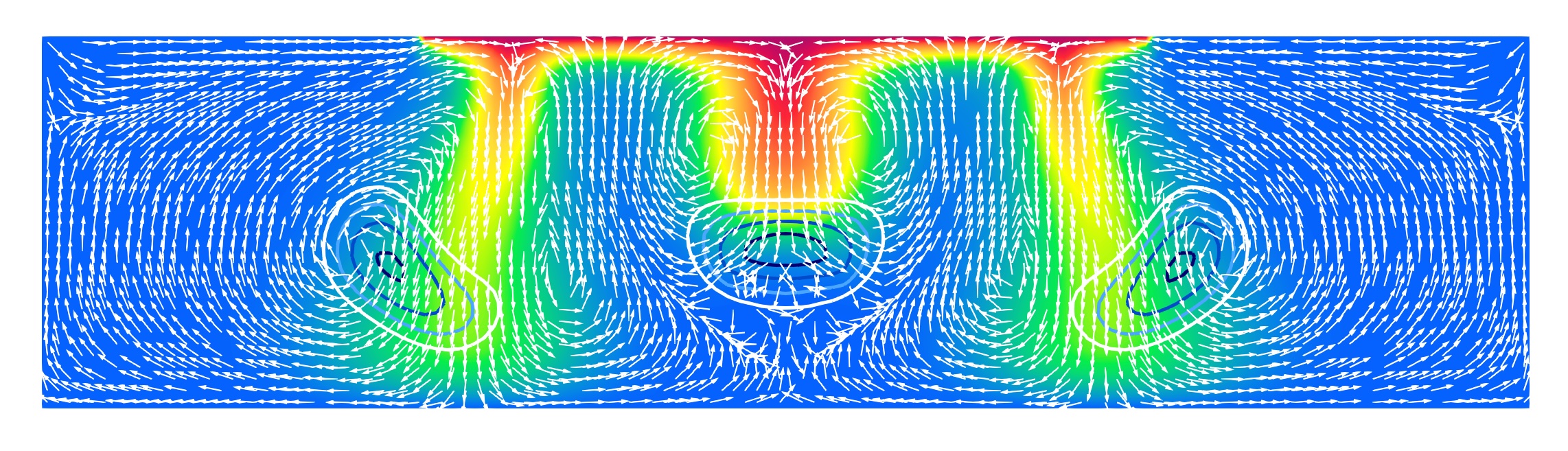
Salt fingers in a domain containing frozen regions.
Simulation created with UG4.
Areas of Expertise
Our Simulation Portfolio
We operate across a broad spectrum of scientific and industrial domains, applying numerical methods to complex real-world problems.
Computational Medicine
Modelling drug transport across skin, 3D simulation of Hepatitis-C virus replication and multi-scale biomedical process modelling.
Computational Neuroscience
Automatic reconstruction of neuron geometries, modelling nuclear calcium codes, electric signalling and synaptic vesicle dynamics.
Computational Finance
Pricing of options with many risk factors and credit risk estimation for large portfolios using advanced stochastic simulation.
Environmental & Energy Science
Density-driven groundwater flow, multiphase flow in porous media and modelling of biogas production processes.
Computational Fluid Dynamics
Large-eddy simulation of turbulent flows, multiphase flows and aeroacoustic modelling of wind turbines.
AI & Physics-Based Models
Combination of physics-based models with AI for industrial process optimisation, surrogate modelling and data-driven inference.
Scientific Approach
Physics-Based Modelling and Simulation
Our models and simulations are grounded in the laws of physics. We develop and apply mathematical methods, including robust, parallel and adaptive multigrid solvers for partial differential equations, to tackle large-scale problems that are intractable with standard approaches.
Where appropriate, we complement our physics-based methods with machine learning, for example to accelerate development workflows or to enhance existing simulation pipelines.
Read about our methodology →Core Numerical Methods